
Visit the opulent opera house that inspired The Phantom of the Opera. Explore grand halls, intricate architecture, and the famous auditorium.
Visit Info & Tips
Stepping into the Palais Garnier is like entering a dream woven from velvet, gold, and theatrical magic. This opulent masterpiece, officially known as the Opéra National de Paris, stands as a crowning jewel of Parisian architecture and a testament to the city's enduring love affair with the arts. Conceived by Charles Garnier as part of Baron Haussmann's grand renovation of Paris, it opened its doors in 1875 and immediately captivated the world with its unparalleled grandeur and innovative design. More than just an opera house, the Palais Garnier is a monument to the Second Empire's extravagant tastes and a living museum of Belle Époque splendor. Its distinctive façade, a harmonious blend of classical elements and elaborate ornamentation, draws the eye with its intricate sculptures, gilded details, and the iconic Apollo Lyre crowning the roof. Inside, the sensory experience only intensifies. The Grand Foyer, often compared to the Hall of Mirrors at Versailles, dazzles with its glittering chandeliers, soaring ceilings adorned with exquisite paintings, and vast reflective surfaces. This space, designed for promenading and socializing among the elite, evokes the vibrant energy of 19th-century Parisian high society. Every corner of the Palais Garnier, from the lavish Grand Staircase with its sweeping marble steps and onyx balustrade to the intimate salons and hidden corridors, tells a story of art, intrigue, and unparalleled craftsmanship. The auditorium itself, a breathtaking expanse of crimson and gold, culminates in Marc Chagall's vibrant ceiling fresco, a controversial yet captivating addition that adds a modern touch to the historical setting, beautifully juxtaposing antiquity with vibrant contemporary art. Beyond its visual splendor, the Palais Garnier holds a profound cultural significance. It was the primary setting for Gaston Leroux's classic novel, The Phantom of the Opera , a story that has indelibly linked the opera house with mystery and romance in the popular imagination. Exploring its hallowed halls, one can almost hear the echoes of past performances and feel the presence of its legendary 'phantom.' While primarily a venue for ballet performances today, the spirit of opera, drama, and artistic excellence permeates every inch of this magnificent structure. A visit to the Palais Garnier is not merely a tour of a building; it's an immersive plunge into an era of unparalleled artistry and a direct connection to the beating heart of Parisian cultural heritage. It continues to inspire wonder, cementing its place as one of the world's most iconic and beloved architectural treasures.




Compare & Save
Practical Info
About Palais Garnier
Commissioned by Napoleon III and designed by the then-unknown architect Charles Garnier, the Palais Garnier is an architectural triumph of the Second Empire style. Opened in 1875, the building was part of Baron Haussmann's massive renovation of Paris, standing at the end of the Avenue de l'Opéra as a symbol of imperial luxury and cultural prestige. The exterior is a symphony of diverse materials, showcasing multicolored marbles, rose-colored columns, and intricate bronze statuary. The façade features famous sculptural groups like Jean-Baptiste Carpeaux's 'La Danse,' while the roof is crowned by emerald-green copper domes and statues of Apollo, Poetry, and Music. Upon entering, the interior reveals a level of opulence that rivals any palace in Europe. The Grand Staircase, built from white Carrara marble with balustrades of red and green marble, rises thirty meters toward a ceiling painted by Isidore Pils. It was designed not just for movement, but as a stage for the Parisian elite to see and be seen during intermissions. The Grand Foyer serves as the building's social heart, heavily inspired by the Hall of Mirrors at Versailles. With its 18-meter-high ceiling dripping in gold leaf and mosaics, it reflects the light from massive crystal chandeliers, creating a dazzling atmosphere that transports visitors back to the Belle Époque. The auditorium remains the house's crown jewel, featuring red velvet seats and the famous six-tonne crystal chandelier. In a bold move in 1964, André Malraux commissioned Marc Chagall to paint a new ceiling, which now depicts scenes from famous operas in a swirling, modern contrast to the classical gold-and-red architecture below.
What to See
Palais Garnier
The Grand Staircase
The Grand Foyer
The Auditorium
The Library-Museum (Bibliothèque-Musée de l'Opéra)
The Salon du Glacier
The Phantom's Legend
FAQ
Exhibitions
1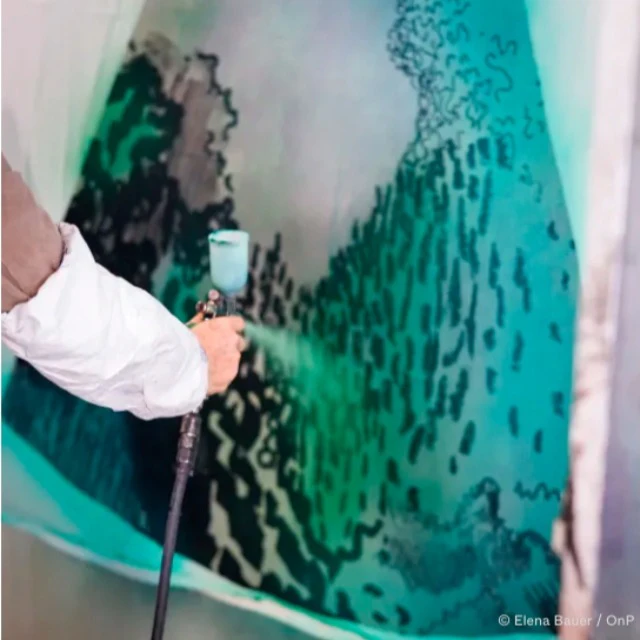
Défis de création
Palais GarnierThe page provides detailed information about cookie usage on a website that aims to enhance user experience through personalization. It covers types of cookies utilized, including necessary, functional, analytical, advertisement, and uncategorized cookies. Each type details its purpose, duration, and specific functions, such as securing logins, improving site interaction, and tracking advertising effectiveness. Users are given control over their cookie preferences, encouraging them to manage settings for a tailored browsing experience. Additionally, there’s a spotlight on an exhibition at the Palais Garnier, highlighting its architectural significance and showcasing upcoming events in Paris.
20 aprile — 1 ottobre 2026
Exhibitions FAQ
What exhibitions are on at Palais Garnier?
1 exhibition currently scheduled at Palais Garnier: Défis de création.
Do I need to book in advance?
Yes — temporary exhibitions at Palais Garnier sell out quickly, especially on weekends. Booking a timed-entry ticket online is strongly recommended.
History
<p>The genesis of Palais Garnier lies in a fascinating blend of architectural competition, imperial ambition, and a near-fatal assassination attempt. In 1858, Emperor Napoleon III, shaken by an attempt on his life outside the current opera house on Rue Le Peletier, decreed the construction of a new, safer, and more magnificent opera house. An architectural competition was launched, attracting 171 entries. To everyone's surprise, the relatively unknown 35-year-old architect Charles Garnier was chosen.</p> <p>Construction began in 1861, fraught with challenges. A subterranean lake was discovered beneath the site, requiring eight months of continuous pumping to lay the foundations – a detail that famously inspired Gaston Leroux's <em>The Phantom of the Opera</em>. The Franco-Prussian War and the Paris Commune riots in the early 1870s halted construction for several years, draining funds and resources. Garnier, however, remained steadfast in his vision.</p> <p>Finally, on January 15, 1875, the Palais Garnier was inaugurated as the seat of the Opéra National de Paris, though its architect, Charles Garnier, initially only received an ordinary ticket to his own creation! The building quickly became a symbol of Parisian luxury and the Second Empire's grandeur, hosting glittering soirées and iconic performances. Its design was revolutionary, combining classical Baroque motifs with contemporary iron framework technology, hidden beneath layers of intricate ornamentation.</p> <p>One of the most notable, and initially controversial, additions was Marc Chagall's vibrant ceiling fresco installed in 1964. Commissioned by the French Minister of Culture, André Malraux, Chagall painted over the original 19th-century ceiling by Jules-Eugène Lenepveu, a decision that sparked intense debate but ultimately added a unique layer to the opera house's artistic legacy, blending modern art with its rich history.</p>
Save more with a Paris Pass that includes Palais Garnier
Bundle multiple top attractions, skip lines and pay less per ticket.
- Multi-attraction access
- Skip-the-line entry
- Better value than single tickets
- Free cancellation on most passes
Prices and inclusions verified with our partners Tiqets and Headout.
You may also like
Other attractions near Palais Garnier


🎟️ Book tickets for Palais Garnier
Book now ↗Book now ↗