
Visit the opulent former royal residence of France, a sprawling complex of palaces, gardens, and museums located just outside Paris. Explore its grandeur and historical significance.
Visit Info & Tips
For a complete experience, the Passport ticket is the safest option as it guarantees access to the King and Queen’s Apartments, the Gardens, and the Trianon Estate. If you only book the Palace ticket, you will miss the Queen’s Hamlet and the Trianon. Always check the calendar for Musical Fountains and Musical Gardens, as these require specific seasonal tickets. If primary dates are sold out on one platform, check the other merchant immediately. For visitors wanting to skip the logistics of the RER C train, we recommend selecting a ticket that includes a shuttle transfer from central Paris. The Palace of Versailles is a vast domain where half a day allows only for a selective visit; a full day is strongly recommended to explore the Hall of Mirrors and the expansive park. This UNESCO World Heritage site represents the pinnacle of 17th-century French art and absolute monarchy. Beyond the gold leaf and the Hall of Mirrors, the estate offers a transition from the formal order of the Palace to the atmospheric intimacy of Marie Antoinette’s private hamlet in the Trianon.








Compare & Save
Practical Info
About Palace of Versailles
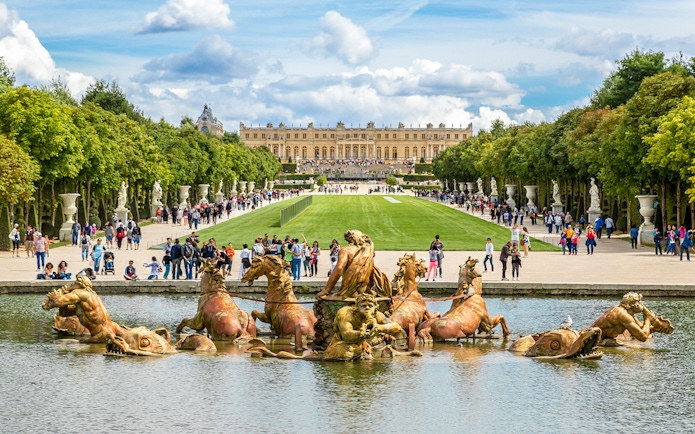
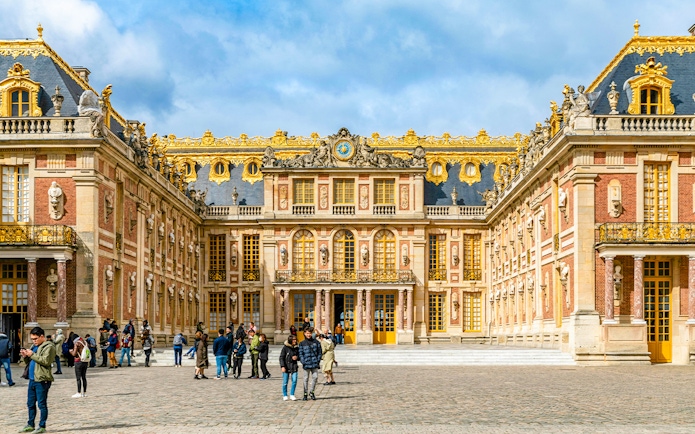
Commissioned by Louis XIV in 1661, the Palace of Versailles represents the pinnacle of French royal grandeur. Originally a modest hunting lodge, it was transformed over several decades into the most ambitious palace in Europe, serving as the official residence of the French court and government from 1682 until the French Revolution in 1789. The architectural team was led by Louis Le Vau and Jules Hardouin-Mansart, while the interior decorative programs were orchestrated by Charles Le Brun. The centerpiece of the palace is the Hall of Mirrors, a 73-meter gallery featuring 357 mirrors that reflect the light from the arched windows overlooking the gardens. This room was not just a display of wealth, but a political statement, showcasing the technological prowess of French glass manufacturing. It was also here that the Treaty of Versailles was signed in 1919, ending World War I. Beyond the golden gates, the gardens of Versailles are an engineering marvel designed by André Le Nôtre. Covering over 800 hectares, the estate features a complex network of fountains, statues, and canals, all aligned in the 'Jardin à la française' style. The Grand Canal, which stretches into the distance, was once used for mock naval battles and gondola rides by the royal court. Away from the main palace's ceremonial rigors lies the Estate of Trianon. This more secluded area includes the Grand Trianon and the Petit Trianon, the latter being the favored retreat of Marie Antoinette. The Queen's Hamlet, a mock rural village with a working farm and picturesque cottages, offered the royal family a rural escape from the intense etiquette of the main court. Today, as a UNESCO World Heritage site, Versailles remains one of the most visited cultural landmarks in the world. It serves as both a museum of the History of France and a venue for state functions, preserving the legacy of the Bourbon monarchy through its restored royal apartments, chapel, and opera house.
What to See
Palace of Versailles
The Hall of Mirrors
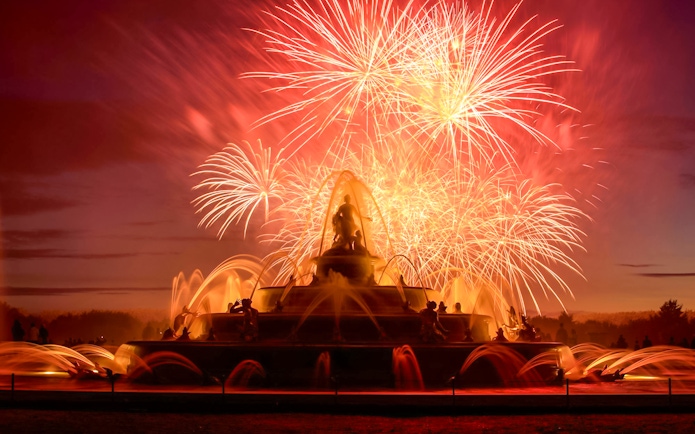
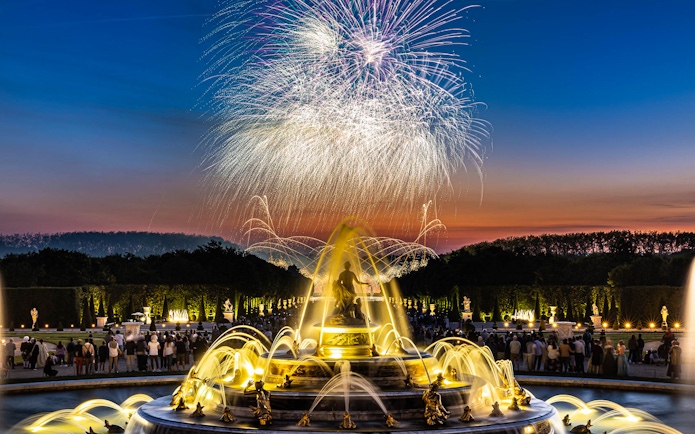
The Gardens & Fountains
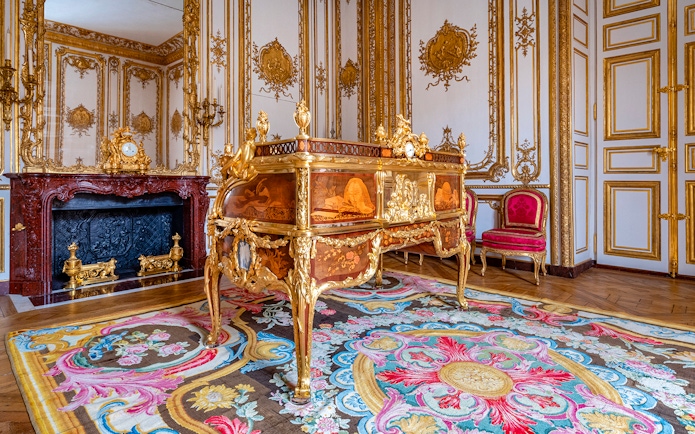
The King's State Apartments
The Estate of Trianon & The Queen's Hamlet
The Royal Chapel
FAQ
Exhibitions
2
Jardins des Lumières, 1750-1800
Palace of VersaillesThe content discusses the use of cookies on a website to enhance user experience and personalization. Users are informed about their options for cookie management, including acceptance or rejection of certain cookie types. Various categories of cookies are detailed, including necessary cookies for site functionality, functional cookies for enhanced user interface, analytical cookies for site performance tracking, and advertisement cookies for targeted ads. Specific cookies are described along with their purpose, duration, and providers, particularly focusing on cookies from Google and Riskified among others. Additionally, the page provides information about the Palace of Versailles, its exhibits, and ticketing options.
5 maggio — 28 settembre 2026

François Morellet au château de Versailles
Palace of VersaillesThe content outlines the use of cookies on a website to offer personalized experiences. It explains how cookies can store user preferences and enhance site functionality while respecting user privacy. There are categories of cookies, including Necessary, Functional, Analytics, and Advertisement cookies, each serving different purposes ranging from enabling basic site functions to tracking user behavior for personalized ads. The page also contains details about various cookies, including their names, durations, and functions. Additionally, it mentions an upcoming exhibition featuring works by François Morellet at the Château de Versailles, with ticket information and highlights of the venue's features.
30 giugno — 2 novembre 2026
Exhibitions FAQ
What exhibitions are on at Palace of Versailles?
2 exhibitions currently scheduled at Palace of Versailles: Jardins des Lumières, 1750-1800; François Morellet au château de Versailles.
Do I need to book in advance?
Yes — temporary exhibitions at Palace of Versailles sell out quickly, especially on weekends. Booking a timed-entry ticket online is strongly recommended.
History
The history of the Palace of Versailles is a narrative of architectural ambition and political centralization. Originally a modest hunting lodge under Louis XIII, the site was transformed by Louis XIV, the 'Sun King,' starting in 1661. His vision was to create a seat of power that could domesticate the French nobility while symbolizing the absolute authority of the crown. Architects Louis Le Vau and Jules Hardouin-Mansart, decorator Charles Le Brun, and landscape designer André Le Nôtre collaborated to create a Baroque masterpiece that influenced royal residences across Europe for centuries. Highlights include the Hall of Mirrors, where 357 mirrors were installed to reflect the sunlight and the power of the King, and the Royal Chapel, a pinnacle of French ecclesiastical architecture. Beyond the main palace, the Great Trianon was built as a secluded retreat for the King, while the Petit Trianon and the Queen’s Hamlet—a model village with its own mill and dairy—provided Marie Antoinette with an escape from the rigid protocols of court life. The estate witnessed the French Revolution's dawn and the signing of the Treaty of Versailles in 1919. Today, it remains an unparalleled museum of French history, showcasing the evolution of taste from the grandeur of the Grand Siècle to the delicate Neoclassicism of the late 18th century.
Save more with a Paris Pass that includes Palace of Versailles
Bundle multiple top attractions, skip lines and pay less per ticket.
- Multi-attraction access
- Skip-the-line entry
- Better value than single tickets
- Free cancellation on most passes
Prices and inclusions verified with our partners Tiqets and Headout.
You may also like
Other attractions near Palace of Versailles


🎟️ Book tickets for Palace of Versailles
Book now ↗Book now ↗