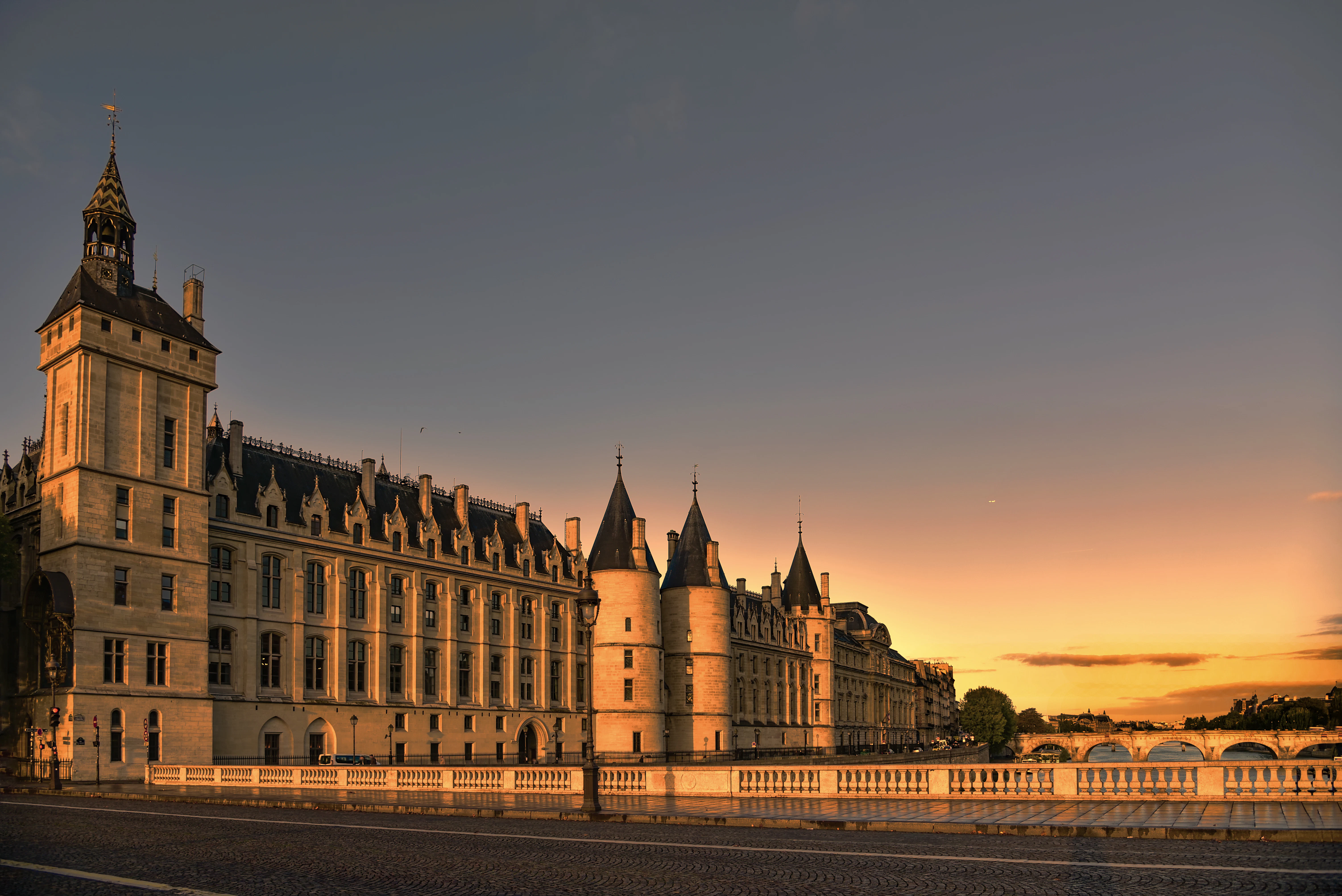
The Conciergerie is a medieval royal palace on the Île de la Cité that became the French Revolution's most infamous prison, where Marie Antoinette awaited the guillotine. Visitors flock here to see the soaring Gothic Hall of the Men-at-Arms—the largest surviving medieval hall in Europe—and explore the reconstructed revolutionary cells.
Visit Info & Tips
Visit Info & Tips: A standard priority entrance ticket includes the HistoPad augmented-reality tablet, which offers a digital reconstruction of the medieval rooms. For the best value, choose a Sainte-Chapelle and Conciergerie combo ticket since these monuments share the same historic site; you can further expand the day with a bundle adding the Archaeological Crypt of Notre-Dame or a Bateaux-Mouches Seine cruise. Those seeking a comprehensive experience should book the 'Paris in a Day' guided tour, which connects the Louvre and Notre-Dame area with the Conciergerie. Always book a timed slot in advance to avoid long queues at this central historic hub.





Compare & Save
-
Conciergerie Priority EntranceTickets
 TiqetsDa€0
 -
Notre Dame Cathedral Of Paris Ile De La Cite Small Group Guided Walking TourToursTiqetsDa€0
-
Paris in a Day: Louvre, Notre-Dame, Sainte-Chapelle & ConciergerieTours
 HeadOutDa€188
 -
Sainte Chapelle Conciergerie Priority EntranceTicketsTiqetsDa€0
-
Sainte-Chapelle & Conciergerie + Musée de l'Armée - Les InvalidesBundlesTiqetsDa€28
Informazioni pratiche
About Conciergerie
Originally known as the Palais de la Cité, the Conciergerie served as the seat of French royal power from the 10th to the 14th century. It was the primary residence of kings such as Saint Louis and Philip the Fair, who transformed the site into a masterpiece of Gothic civil architecture. When Charles V moved the royal court to the Louvre in 1358, the building was left to the 'Concierge'—the high-ranking official responsible for maintaining order and managing the administration of justice. Its monumental Gothic interiors remain some of the finest in the world. The Salle des Gens d'Armes (Hall of the Men-at-Arms), built under Philip the Fair around 1300, is a vast vaulted space that once served as the magnificent dining hall for the king's 2,000 royal staff members. Nearby, the Salle des Gardes served as the king's reception room and remains an architectural marvel of rib-vaulted construction. From 1391, the complex began its transition into a prison, eventually becoming the most dreaded detention center in France. During the Reign of Terror (1793–1794), it earned the nickname 'the antechamber of the guillotine.' More than 2,700 prisoners were held here before their executions, including Danton, Robespierre, and most famously, Queen Marie Antoinette, whose former cell has since been converted into a memorial chapel. Today, the site stands as a dual testament to medieval grandeur and revolutionary turmoil. Visitors can walk through the dark corridors of the prison while comparing them to the majestic riverside towers, including the Tour de l'Horloge, which houses Paris's first public clock. This unique architectural mix makes the Conciergerie one of the most significant historical landmarks in the heart of Paris.
What to See
Conciergerie
Salle des Gens d'Armes
Marie Antoinette's Commemorative Chapel
The HistoPad Experience
Tour de l'Horloge
The Prisoners' Corridor and Courtyard
FAQ
La Storia
The Conciergerie stands as the oldest remaining vestige of the Palais de la Cité, the first royal residence of French kings. Its architecture reflects two distinct eras: the medieval power of the Capetian dynasty and the judicial severity of the French Revolution. In the 14th century, Philippe the Fair expanded the palace to include the Salle des Gens d'Armes and the Salle des Gardes, structures that remain unparalleled examples of Gothic vaulted design. These halls originally served the royal court and administrative personnel, demonstrating the wealth and logistical reach of the French monarchy before the royal family relocated to the Louvre and Vincennes. By the late 14th century, the palace took on a secondary role as a prison under the authority of the 'Concierge,' a high-ranking official appointed by the King. This judicial function intensified during the Reign of Terror (1793-1794). The Conciergerie became the 'antechamber of the guillotine,' the primary detention site for over 2,700 prisoners destined for execution. The narrative focus within the site explores this dark transition, specifically the confinement of Marie Antoinette. Her cell was later converted into a commemorative chapel. Today, the monument is managed by the Centre des monuments nationaux and serves as a vital historical link. It illustrates how a single site can evolve from a symbol of absolute monarchy to the administrative heart of the Republic's justice system, sitting directly adjacent to the modern Palais de Justice.
Risparmia con un Paris Pass che include Conciergerie
Combina più attrazioni top, salta la coda e paga meno a biglietto.
- Accesso a più attrazioni
- Salta la coda
- Più conveniente dei biglietti singoli
- Cancellazione gratuita su molti pass
Prezzi e inclusioni verificati con i nostri partner Tiqets e Headout.
Potrebbe interessarti
Altre attrazioni vicino a Conciergerie


🎟️ Prenota biglietti per Conciergerie
PRENOTA ORA ↗PRENOTA ORA ↗