
Sainte-Chapelle is a majestic 13th-century royal chapel on Île de la Cité, famous for its 1,113 brilliant stained-glass panels depicting biblical history. Originally built to house the Crown of Thorns, it remains a supreme masterpiece of Rayonnant Gothic architecture and a jewel box of light and color.
Visit Info & Tips
Para la entrada prioritaria, elija el boleto digital con franja horaria; el pase combinado con la Conciergerie ofrece el mejor valor, ya que ambos monumentos ocupan el mismo sitio histórico. Si su fecha preferida está agotada en Tiqets, consulte Headout para ver el inventario restante o considere una visita guiada, que a menudo cuenta con cupos separados. Este boleto cubre las capillas inferior y superior, aunque los controles de seguridad obligatorios para el Palacio de Justicia se aplican a todos los visitantes, independientemente del tipo de boleto. Esta obra maestra gótica del siglo XIII se define por su capilla superior, donde 1,113 paneles de vitrales recrean narrativas bíblicas a través de 15 altísimas ventanas. Aunque la visita es relativamente breve, normalmente de menos de una hora, el impacto visual de la luz filtrándose a través de los cristales no tiene parangón en París. Sigue siendo el ejemplo más significativo de la arquitectura gótica radiante, diseñado originalmente para albergar la Corona de Espinas. Visitar durante el mediodía o en días soleados maximiza la experiencia, ya que la intensidad de los colores en los vitrales cambia con la luz natural.




Compare & Save
-
Sainte-Chapelle & Conciergerie: Entry TicketTickets
 TiqetsDesde€30
-
Sainte-Chapelle: Skip-the-Line Ticket + Small Group Guided TourToursTiqetsDesde€102
-
Île de la Cité Guided Tour with Sainte-Chapelle EntryTours
 HeadOutDesde€31
-
Sainte-Chapelle: Entry TicketTicketsTiqetsDesde€30
-
Notre-Dame Cathedral of Paris & Sainte-Chapelle: Semi-Private Guided TourToursTiqetsDesde€180
Información práctica
About Sainte-Chapelle
Commissioned by King Louis IX, or Saint Louis, and consecrated in 1248, Sainte-Chapelle was designed as a monumental reliquary. Built within the heart of the medieval Palais de la Cité, its primary purpose was to house the Crown of Thorns and other sacred Passion relics that the king had purchased from the Emperor of Constantinople for a sum far exceeding the chapel's construction costs. The architecture represents the pinnacle of the Rayonnant Gothic style. The structural walls are so remarkably thin and refined that they effectively disappear, replaced by soaring 15-meter-high windows. This design was intended to create a celestial atmosphere, where the sheer volume of glass makes visitors feel as though they are standing inside a kaleidoscope of divine light. The building is divided into two distinct levels. The Lower Chapel, decorated with a low, starry blue vault and slender columns, served as the place of worship for the palace staff and commoners. It features a statue of Saint Louis and a colorful 19th-century restoration that reflects the original medieval aesthetic. The Upper Chapel was reserved for the King, the royal family, and their close court. It is here that the 1,113 stained-glass scenes are located across fifteen windows, narrating the history of the world from Genesis to the arrival of the relics in Paris. The Rose Window on the western wall depicts the Apocalypse and serves as a dramatic finale to the visual narrative. Following the French Revolution, the chapel was used as a storehouse for legal archives, which paradoxically helped preserve the glass from destruction. Extensive restorations in the 19th century saved the spire and the interior polychrome decorations, ensuring the chapel remains one of the most complete and spectacular examples of medieval artistry in the world.
What to See
Sainte-Chapelle
The Stained-Glass Windows
The Western Rose Window
The Relic Tribune
The Lower Chapel
The Apostles Statues
FAQ
Historia
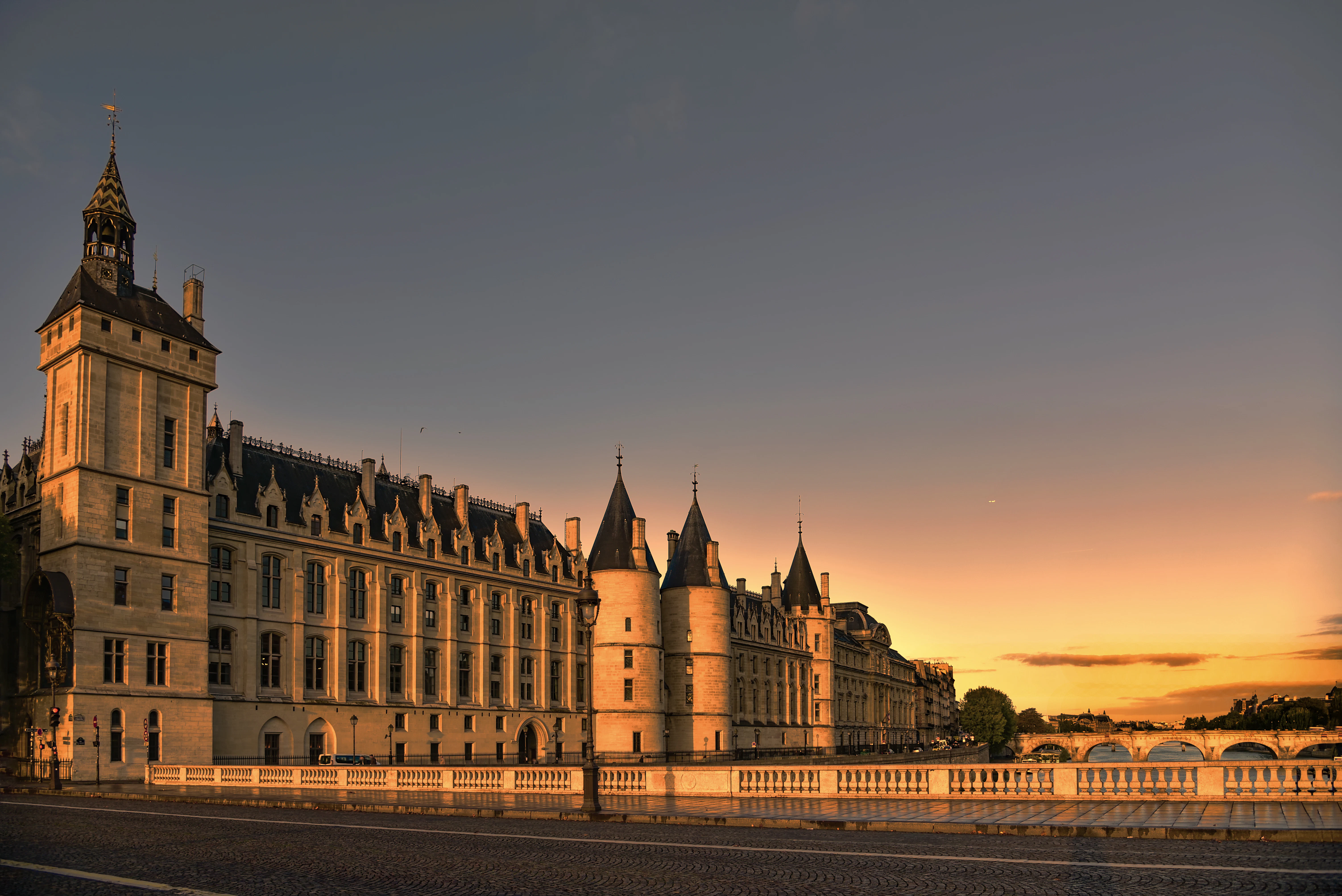
Encargada por el rey Luis IX (San Luis) a mediados del siglo XIII, la Sainte-Chapelle fue concebida no solo como un lugar de culto, sino como un relicario monumental. Su propósito principal era albergar las Reliquias de la Pasión, incluyendo la Corona de Espinas y un fragmento de la Vera Cruz, comprados al emperador bizantino Balduino II por una suma significativamente superior a los costes de construcción de la capilla. Arquitectónicamente, el edificio representa la cumbre del estilo gótico radiante, caracterizado por un cambio hacia la ligereza y la minimización de la mampostería de piedra en favor de superficies de vidrio expansivas. La estructura se divide en dos niveles distintos: la Capilla Inferior, que servía como iglesia parroquial para el personal y residentes del palacio, y la Capilla Superior, reservada exclusivamente para el Rey, su familia y allegados. Las paredes del santuario superior están casi totalmente reemplazadas por vitrales, que alcanzan los 15 metros de altura. Estas ventanas representan más de mil escenas del Antiguo y Nuevo Testamento, creando efectivamente una 'Biblia en vidrio' para el espectador medieval. A pesar de sufrir daños durante la Revolución Francesa, cuando fue utilizada como almacén de grano y archivo administrativo, la capilla se sometió a una extensa restauración en el siglo XIX bajo la dirección de Viollet-le-Duc y Felix Duban. Hoy en día, se mantiene como una reliquia preservada del antiguo Palais de la Cité, la antigua residencia de los reyes de Francia, ahora rodeada por los complejos modernos del Palacio de Justicia.
Économisez avec un Paris Pass incluant Sainte-Chapelle
Combinez plusieurs attractions, évitez les files et payez moins par billet.
- Accès multi-attractions
- Coupe-file inclus
- Plus avantageux qu'à l'unité
- Annulation gratuite sur la plupart
Prix et inclusions vérifiés avec nos partenaires Tiqets et Headout.
También te puede gustar
Otras atracciones cerca de Sainte-Chapelle


🎟️ Reservar entradas para Sainte-Chapelle
Reservar ahora ↗Reservar ahora ↗