
The Palace of Versailles is a monumental masterpiece of French Baroque architecture and the former seat of absolute power for the Sun King, Louis XIV. Visitors flock here to witness the staggering opulence of the Hall of Mirrors, the meticulously manicured gardens, and the intimate royal retreats of Trianon and Marie-Antoinette's Hamlet.
Visit Info & Tips
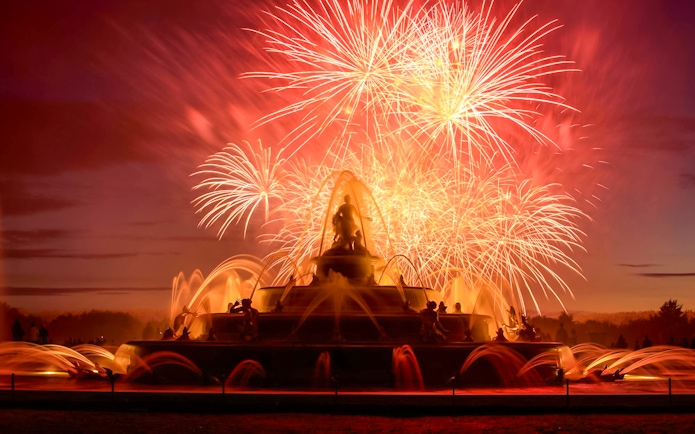
Para una experiencia completa, la entrada Pasaporte es la opción más segura, ya que garantiza el acceso a los Apartamentos del Rey y la Reina, los Jardines y el Dominio de Trianon. Si solo reserva la entrada para el Palacio, se perderá la Aldea de la Reina y el Trianon. Consulte siempre el calendario para las Fuentes Musicales y los Jardines Musicales, ya que estos requieren entradas de temporada específicas. Si las fechas principales están agotadas en una plataforma, consulte el otro comerciante de inmediato. Para los visitantes que deseen evitar la logística del tren RER C, recomendamos seleccionar una entrada que incluya un traslado en lanzadera desde el centro de París. El Palacio de Versailles es un dominio vasto donde medio día solo permite una visita selectiva; se recomienda encarecidamente un día completo para explorar la Galería de los Espejos y el extenso parque. Este sitio Patrimonio de la Humanidad por la UNESCO representa la cumbre del arte francés del siglo XVII y la monarquía absoluta. Más allá del pan de oro y la Galería de los Espejos, la finca ofrece una transición desde el orden formal del Palacio hasta la intimidad atmosférica de la aldea privada de María Antonieta en el Trianon.








Compare & Save
Información práctica
About Palace of Versailles
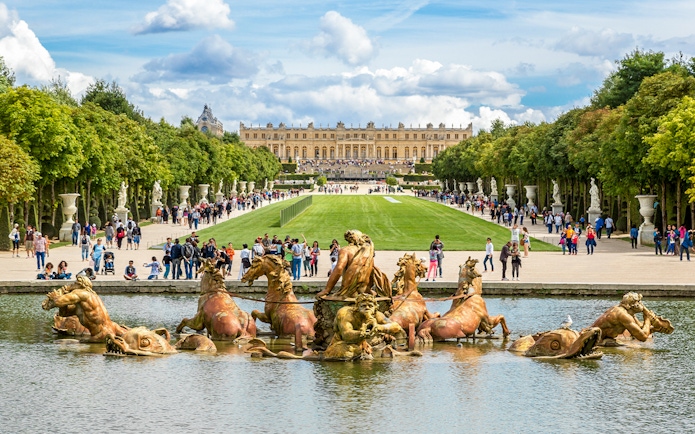
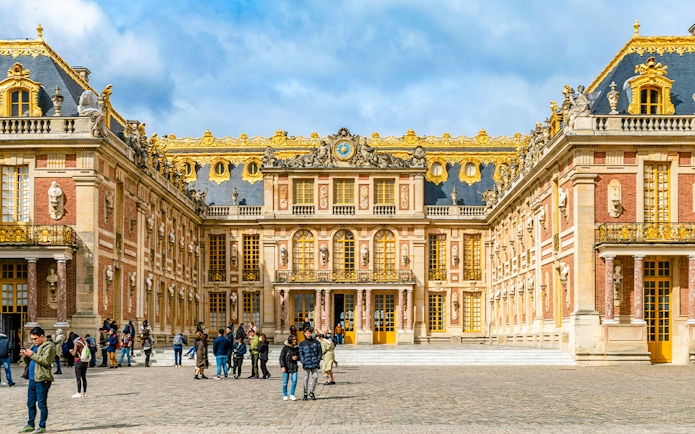
Commissioned by Louis XIV in 1661, the Palace of Versailles represents the pinnacle of French royal grandeur. Originally a modest hunting lodge, it was transformed over several decades into the most ambitious palace in Europe, serving as the official residence of the French court and government from 1682 until the French Revolution in 1789. The architectural team was led by Louis Le Vau and Jules Hardouin-Mansart, while the interior decorative programs were orchestrated by Charles Le Brun. The centerpiece of the palace is the Hall of Mirrors, a 73-meter gallery featuring 357 mirrors that reflect the light from the arched windows overlooking the gardens. This room was not just a display of wealth, but a political statement, showcasing the technological prowess of French glass manufacturing. It was also here that the Treaty of Versailles was signed in 1919, ending World War I. Beyond the golden gates, the gardens of Versailles are an engineering marvel designed by André Le Nôtre. Covering over 800 hectares, the estate features a complex network of fountains, statues, and canals, all aligned in the 'Jardin à la française' style. The Grand Canal, which stretches into the distance, was once used for mock naval battles and gondola rides by the royal court. Away from the main palace's ceremonial rigors lies the Estate of Trianon. This more secluded area includes the Grand Trianon and the Petit Trianon, the latter being the favored retreat of Marie Antoinette. The Queen's Hamlet, a mock rural village with a working farm and picturesque cottages, offered the royal family a rural escape from the intense etiquette of the main court. Today, as a UNESCO World Heritage site, Versailles remains one of the most visited cultural landmarks in the world. It serves as both a museum of the History of France and a venue for state functions, preserving the legacy of the Bourbon monarchy through its restored royal apartments, chapel, and opera house.
What to See
Palace of Versailles
The Hall of Mirrors
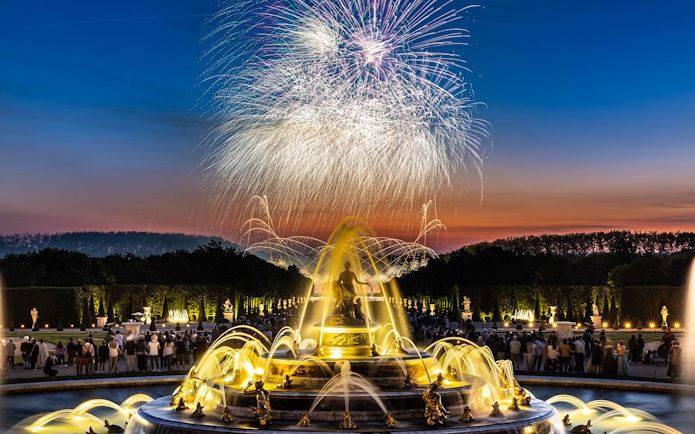
The Gardens & Fountains
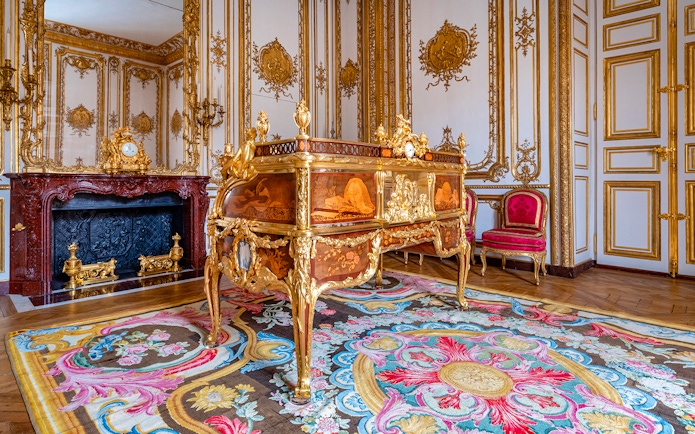
The King's State Apartments
The Estate of Trianon & The Queen's Hamlet
The Royal Chapel
FAQ
Exposiciones
2
Jardins des Lumières, 1750-1800
Palace of VersaillesThe content discusses the use of cookies on a website to enhance user experience and personalization. Users are informed about their options for cookie management, including acceptance or rejection of certain cookie types. Various categories of cookies are detailed, including necessary cookies for site functionality, functional cookies for enhanced user interface, analytical cookies for site performance tracking, and advertisement cookies for targeted ads. Specific cookies are described along with their purpose, duration, and providers, particularly focusing on cookies from Google and Riskified among others. Additionally, the page provides information about the Palace of Versailles, its exhibits, and ticketing options.
5 maggio — 28 settembre 2026

François Morellet au château de Versailles
Palace of VersaillesThe content outlines the use of cookies on a website to offer personalized experiences. It explains how cookies can store user preferences and enhance site functionality while respecting user privacy. There are categories of cookies, including Necessary, Functional, Analytics, and Advertisement cookies, each serving different purposes ranging from enabling basic site functions to tracking user behavior for personalized ads. The page also contains details about various cookies, including their names, durations, and functions. Additionally, it mentions an upcoming exhibition featuring works by François Morellet at the Château de Versailles, with ticket information and highlights of the venue's features.
30 giugno — 2 novembre 2026
Domande frequenti sulle mostre
Quali mostre sono in corso a Palace of Versailles?
2 mostre attualmente in programma a Palace of Versailles: Jardins des Lumières, 1750-1800; François Morellet au château de Versailles.
È necessario prenotare in anticipo?
Sì — le mostre temporanee a Palace of Versailles si esauriscono rapidamente, soprattutto nei weekend. Si consiglia di prenotare un biglietto con ingresso a orario online.
Historia
La historia del Palacio de Versailles es un relato de ambición arquitectónica y centralización política. Originalmente un modesto pabellón de caza bajo Luis XIII, el sitio fue transformado por Luis XIV, el 'Rey Sol', a partir de 1661. Su visión era crear una sede de poder que pudiera domesticar a la nobleza francesa y simbolizar al mismo tiempo la autoridad absoluta de la corona. Los arquitectos Louis Le Vau y Jules Hardouin-Mansart, el decorador Charles Le Brun y el paisajista André Le Nôtre colaboraron para crear una obra maestra del Barroco que influyó en las residencias reales de toda Europa durante siglos. Los puntos destacados incluyen la Galería de los Espejos, donde se instalaron 357 espejos para reflejar la luz del sol y el poder del Rey, y la Capilla Real, una cumbre de la arquitectura eclesiástica francesa. Más allá del palacio principal, el Gran Trianon fue construido como un retiro apartado para el Rey, mientras que el Pequeño Trianon y la Aldea de la Reina —un pueblo modelo con su propio molino y lechería— proporcionaron a María Antonieta un escape de los rígidos protocolos de la vida cortesana. La finca fue testigo del amanecer de la Revolución Francesa y de la firma del Tratado de Versailles en 1919. Hoy en día, sigue siendo un museo inigualable de la historia de Francia, que muestra la evolución del gusto desde el esplendor del Grand Siècle hasta el delicado neoclasicismo de finales del siglo XVIII.
Économisez avec un Paris Pass incluant Palace of Versailles
Combinez plusieurs attractions, évitez les files et payez moins par billet.
- Accès multi-attractions
- Coupe-file inclus
- Plus avantageux qu'à l'unité
- Annulation gratuite sur la plupart
Prix et inclusions vérifiés avec nos partenaires Tiqets et Headout.
También te puede gustar
Otras atracciones cerca de Palace of Versailles


🎟️ Reservar entradas para Palace of Versailles
Reservar ahora ↗Reservar ahora ↗