
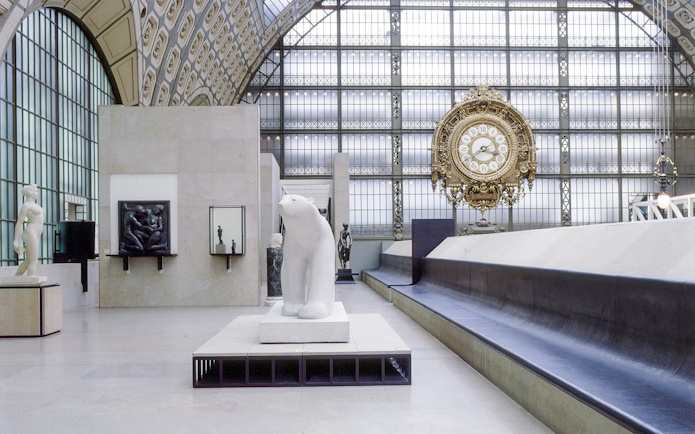
Housed in a grand Beaux-Arts railway station on the Left Bank of the Seine, the Musée d'Orsay holds the world's greatest collection of Impressionist and Post-Impressionist masterpieces. Visitors come to admire works by Monet, Renoir, Degas, and Van Gogh beneath the iconic golden station clocks overlooking Paris.
Visit Info & Tips
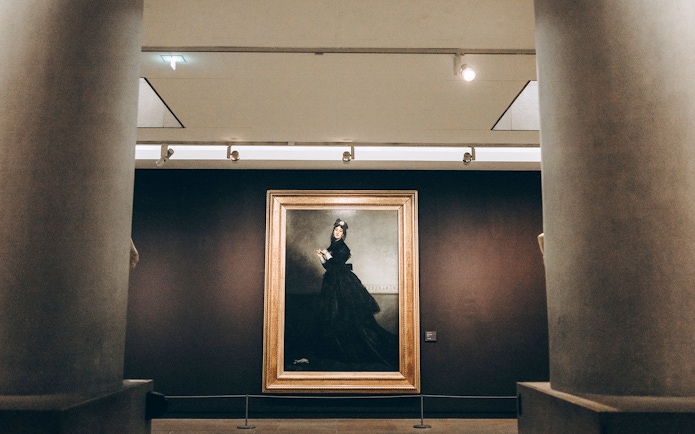
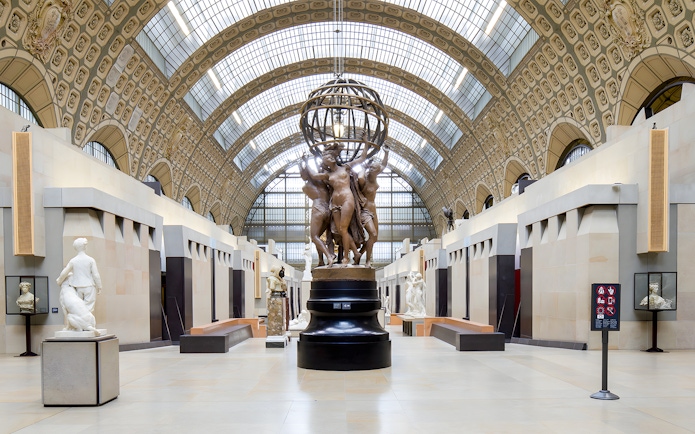
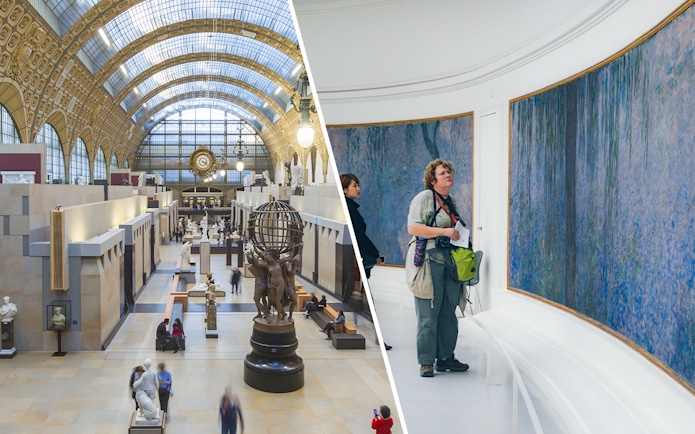
Para obtener acceso inmediato a la colección impresionista más importante del mundo, reserve su boleto sin colas dedicado para asegurar su franja de entrada. Si el calendario principal no muestra disponibilidad, consulte las opciones de visitas guiadas de Headout, que suelen conservar cupos para guías profesionales incluso cuando los boletos estándar están agotados. Este boleto incluye las colecciones permanentes y, según su selección, el acceso a las exposiciones temporales. El Musée d'Orsay ofrece una experiencia más digerible y especializada que el Louvre, permitiéndole recorrer la evolución del arte occidental entre 1848 y 1914 en aproximadamente 2 a 3 horas. Más allá de los famosos lienzos de Monet y Van Gogh, su visita debe priorizar las esculturas del siglo XIX de la gran nave y el magistral departamento de artes decorativas. El edificio en sí, una estación de tren de estilo Beaux-Arts reformada, es una obra maestra estructural. Lo más destacado para muchos sigue siendo la esfera gigante del reloj en el último piso, que ofrece una vista enmarcada única del Sena y el Louvre al otro lado del río, sirviendo como el telón de fondo perfecto para comprender la transición del academicismo a la modernidad.





Compare & Save
-
Musée d'Orsay: Dedicated EntranceTickets
 TiqetsDesde€15
-
Orsay Museum Reserved Access TicketsTickets
 HeadOutDesde€16
-
Musée d'Orsay: Small Group TourToursTiqetsDesde€113
-
Musée d'Orsay Skip-the-Line Guided TourToursHeadOutDesde€67
-
Musée d'Orsay: Renoir and Love (1865-1885)TicketsTiqetsDesde€20
Información práctica
About Musée d'Orsay
Originally built as the Gare d'Orsay railway station for the 1900 Universal Exposition, the Musée d'Orsay is a Beaux-Arts masterpiece by architect Victor Laloux. Its soaring 138-metre nave, coffered ceilings, and giant ornamental clocks remain as testament to its industrial heritage, providing a dramatic backdrop for the transition into 19th-century art. After serving rail passengers until 1939, the building narrowly escaped demolition before it was transformed into a museum in 1986. It was designed to bridge the gap between the classical collections of the Louvre and the contemporary art of the Centre Pompidou, focusing on the highly productive period between 1848 and 1914. Today, the museum is synonymous with the Impressionist movement. Its galleries house world-renowned works including Manet's 'Olympia', Renoir's 'Bal du moulin de la Galette', and multiple iterations of Monet's 'Rouen Cathedral' and 'Water Lilies'. The fifth floor, in particular, offers a chronological journey through the radical brushstrokes that changed art forever. Beyond paintings, the museum displays an extensive collection of sculpture, decorative arts, and photography. Notable works by Rodin and Claudel are interspersed with Art Nouveau furniture, showcasing the total artistic shift of the Belle Époque. The massive station clock on the top floor also serves as a famous viewpoint, offering a unique silhouette of the Sacré-Cœur across the city.
What to See
Musée d'Orsay
The Impressionist Gallery
Van Gogh’s Masterpieces
The Giant Station Clocks
The Great Nave
Renoir's 'Bal du moulin de la Galette'
FAQ
Exposiciones
4
Youssef Nabil. De rêver encore
Musée d'OrsayThe web page discusses cookie usage on the site, emphasizing the importance of cookies for personalization, functionality, and analytics. Users can manage their cookie preferences in the settings. The necessary cookies enable basic site operations and security, while functional cookies enhance user experience. Analytical cookies provide insights into visitor engagement and advertising cookies tailor ads based on user behavior. Following this section, there is a detailed list of specific cookies used, their durations, and descriptions of their functions. The page then shifts to information about an exhibition titled "Youssef Nabil: Still Dreaming" at the Musée d'Orsay, showcasing Nabil's artistry and photos. The summary includes details on the museum's location, opening hours, and ongoing exhibitions.
19 maggio — 14 settembre 2026

Parcours « 100 œuvres qui racontent le travail » : travailler au XIXe siècle
Musée d'OrsayThe webpage discusses the use of cookies on a site to enhance user experience and provide personalized content. Users are informed about the categories of cookies, including necessary, functional, analytical, advertisement, and uncategorized cookies, along with specific examples and their durations. The site also includes an exhibition at the Musée d'Orsay titled '100 Works That Tell the Story of Work,' focusing on 19th-century masterpieces, alongside details about upcoming events, reviews, and general visitor information for the museum.
31 marzo — 3 agosto 2026

Renoir Dessinateur
Musée d'OrsayThe content discusses cookie usage on a website, highlighting the personalization features they provide. It categorizes cookies into Necessary, Functional, Analytics, Advertisement, and Uncategorized. Each category includes specific cookies, their durations, and descriptions of their functions. Additionally, it mentions an exhibition at the Musée d'Orsay featuring works by Renoir, illustrating the connection between his paintings and drawings. The museum is noted for its significant collection of Impressionist and Post-Impressionist art. Furthermore, practical details like opening hours and ticket information are shared, emphasizing the importance of advanced booking to ensure a smooth visitor experience.
17 marzo — 6 luglio 2026

Renoir et l'amour : Une modernité joyeuse (1865-1885)
Musée d'OrsayThe content provides details on cookie usage for personalized web experiences, informing users about managing their preferences through cookie settings. Necessary cookies ensure basic functionalities like security and accessibility, while functional, analytical, and advertisement cookies support enhanced user interaction and targeted advertising. It also highlights a specific exhibition, "Renoir and Love: a Joyful Modernity: 1865-1885," at the Musée d'Orsay, showcasing Renoir's works and ongoing museum operations, including details about visiting hours and location.
17 marzo — 20 luglio 2026
Domande frequenti sulle mostre
Quali mostre sono in corso a Musée d'Orsay?
4 mostre attualmente in programma a Musée d'Orsay: Youssef Nabil. De rêver encore; Parcours « 100 œuvres qui racontent le travail » : travailler au XIXe siècle; Renoir Dessinateur; Renoir et l'amour : Une modernité joyeuse (1865-1885).
È necessario prenotare in anticipo?
Sì — le mostre temporanee a Musée d'Orsay si esauriscono rapidamente, soprattutto nei weekend. Si consiglia di prenotare un biglietto con ingresso a orario online.
Historia
La historia del Musée d'Orsay es tan cautivadora como el arte que alberga. Inaugurado originalmente como la Gare d'Orsay para la Exposition Universelle de 1900, el edificio fue un triunfo de la arquitectura industrial. Diseñado por Victor Laloux, presentaba una ornamentada fachada de piedra que ocultaba una moderna estructura de hierro y vidrio, funcionando como el centro de la red ferroviaria del suroeste de Francia. Sin embargo, a medida que la tecnología ferroviaria evolucionó y los andenes se volvieron demasiado cortos para los trenes eléctricos modernos hacia 1939, la utilidad de la estación disminuyó. Escapó por poco de la demolición en la década de 1970 cuando el gobierno francés decidió convertirla en un museo para cerrar la brecha cronológica entre el Louvre y el Centre Pompidou. Esta transformación, dirigida por la arquitecta Gae Aulenti y completada en 1986, preservó el volumen cavernoso y la iluminación natural de la estación. El resultado es un lugar donde la grandeza industrial de la Belle Époque se encuentra con las pinceladas radicales de los impresionistas. Hoy en día, se erige como el lugar de descanso final de obras que definieron el mundo, como 'Olympia' de Manet y 'Bal du moulin de la Galette' de Renoir, ubicadas dentro de un espacio que refleja la misma era de progreso y transformación que estos artistas buscaron capturar en el lienzo.
Économisez avec un Paris Pass incluant Musée d'Orsay
Combinez plusieurs attractions, évitez les files et payez moins par billet.
- Accès multi-attractions
- Coupe-file inclus
- Plus avantageux qu'à l'unité
- Annulation gratuite sur la plupart
Prix et inclusions vérifiés avec nos partenaires Tiqets et Headout.
También te puede gustar
Otras atracciones cerca de Musée d'Orsay


🎟️ Reservar entradas para Musée d'Orsay
Reservar ahora ↗Reservar ahora ↗