
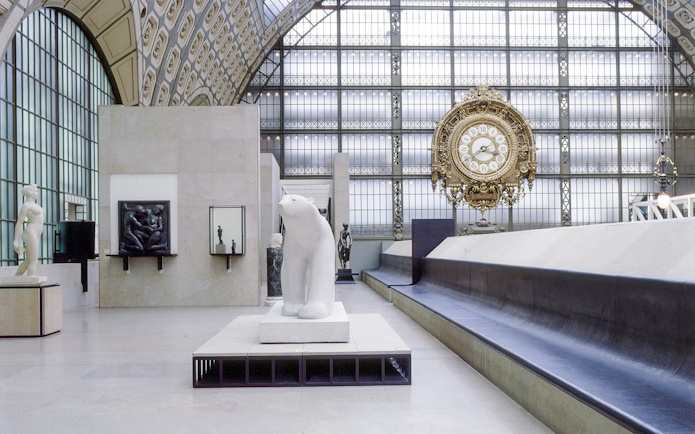
Housed in a grand Beaux-Arts railway station on the Left Bank of the Seine, the Musée d'Orsay holds the world's greatest collection of Impressionist and Post-Impressionist masterpieces. Visitors come to admire works by Monet, Renoir, Degas, and Van Gogh beneath the iconic golden station clocks overlooking Paris.
Visit Info & Tips
Um sofortigen Zugang zur weltweit führenden impressionistischen Sammlung zu erhalten, buchen Sie das spezielle Skip-the-Line-Ticket, um sich Ihr Zeitfenster zu sichern. Falls der Hauptkalender keine Verfügbarkeit anzeigt, prüfen Sie die geführten Touren von Headout, die oft noch Kontingente für professionelle Führungen bereithalten, selbst wenn Standardtickets ausverkauft sind. Dieses Ticket beinhaltet die ständigen Sammlungen und, je nach Auswahl, den Zugang zu Sonderausstellungen. Das Musée d'Orsay bietet ein überschaubareres und spezialisierteres Erlebnis als der Louvre und ermöglicht es Ihnen, die Entwicklung der westlichen Kunst zwischen 1848 und 1914 in etwa 2 bis 3 Stunden zu durchlaufen. Neben den berühmten Leinwänden von Monet und Van Gogh sollte Ihr Besuch den Skulpturen des 19. Jahrhunderts im großen Mittelschiff und der meisterhaften Abteilung für dekorative Künste Priorität einräumen. Das Gebäude selbst, ein umfunktionierter Bahnhof im Beaux-Arts-Stil, ist ein bauliches Meisterwerk. Das Highlight für viele bleibt das riesige Zifferblatt der Uhr im obersten Stockwerk, das einen einzigartigen gerahmten Blick auf die Seine und den Louvre gegenüber bietet und als perfekte Kulisse dient, um den Übergang vom Akademismus zur Moderne zu verstehen.







Compare & Save
Praktische Infos
About Musée d'Orsay
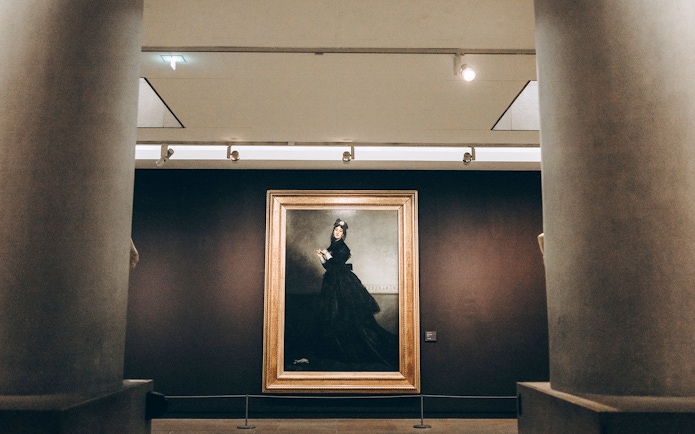
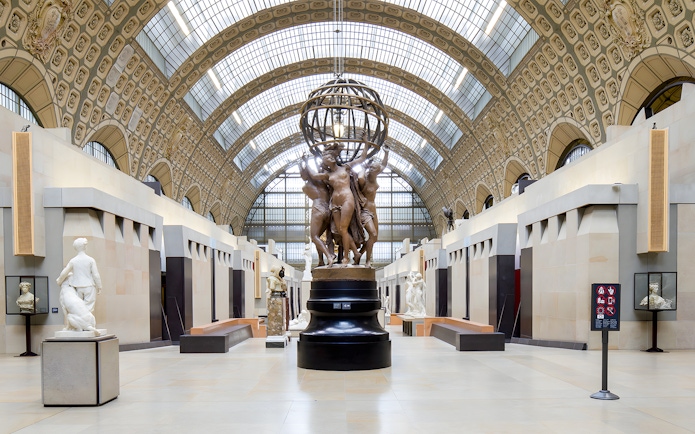
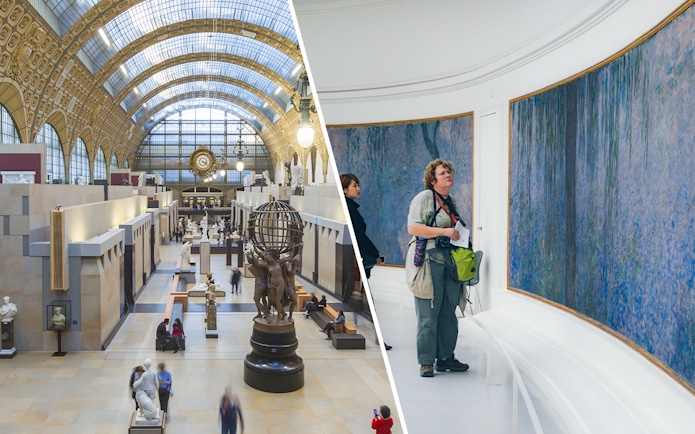
Originally built as the Gare d'Orsay railway station for the 1900 Universal Exposition, the Musée d'Orsay is a Beaux-Arts masterpiece by architect Victor Laloux. Its soaring 138-metre nave, coffered ceilings, and giant ornamental clocks remain as testament to its industrial heritage, providing a dramatic backdrop for the transition into 19th-century art. After serving rail passengers until 1939, the building narrowly escaped demolition before it was transformed into a museum in 1986. It was designed to bridge the gap between the classical collections of the Louvre and the contemporary art of the Centre Pompidou, focusing on the highly productive period between 1848 and 1914. Today, the museum is synonymous with the Impressionist movement. Its galleries house world-renowned works including Manet's 'Olympia', Renoir's 'Bal du moulin de la Galette', and multiple iterations of Monet's 'Rouen Cathedral' and 'Water Lilies'. The fifth floor, in particular, offers a chronological journey through the radical brushstrokes that changed art forever. Beyond paintings, the museum displays an extensive collection of sculpture, decorative arts, and photography. Notable works by Rodin and Claudel are interspersed with Art Nouveau furniture, showcasing the total artistic shift of the Belle Époque. The massive station clock on the top floor also serves as a famous viewpoint, offering a unique silhouette of the Sacré-Cœur across the city.
What to See
Musée d'Orsay
The Impressionist Gallery
Van Gogh’s Masterpieces
The Giant Station Clocks
The Great Nave
Renoir's 'Bal du moulin de la Galette'
FAQ
Ausstellungen
4
Youssef Nabil. De rêver encore
Musée d'OrsayThe web page discusses cookie usage on the site, emphasizing the importance of cookies for personalization, functionality, and analytics. Users can manage their cookie preferences in the settings. The necessary cookies enable basic site operations and security, while functional cookies enhance user experience. Analytical cookies provide insights into visitor engagement and advertising cookies tailor ads based on user behavior. Following this section, there is a detailed list of specific cookies used, their durations, and descriptions of their functions. The page then shifts to information about an exhibition titled "Youssef Nabil: Still Dreaming" at the Musée d'Orsay, showcasing Nabil's artistry and photos. The summary includes details on the museum's location, opening hours, and ongoing exhibitions.
19 maggio — 14 settembre 2026

Parcours « 100 œuvres qui racontent le travail » : travailler au XIXe siècle
Musée d'OrsayThe webpage discusses the use of cookies on a site to enhance user experience and provide personalized content. Users are informed about the categories of cookies, including necessary, functional, analytical, advertisement, and uncategorized cookies, along with specific examples and their durations. The site also includes an exhibition at the Musée d'Orsay titled '100 Works That Tell the Story of Work,' focusing on 19th-century masterpieces, alongside details about upcoming events, reviews, and general visitor information for the museum.
31 marzo — 3 agosto 2026

Renoir Dessinateur
Musée d'OrsayThe content discusses cookie usage on a website, highlighting the personalization features they provide. It categorizes cookies into Necessary, Functional, Analytics, Advertisement, and Uncategorized. Each category includes specific cookies, their durations, and descriptions of their functions. Additionally, it mentions an exhibition at the Musée d'Orsay featuring works by Renoir, illustrating the connection between his paintings and drawings. The museum is noted for its significant collection of Impressionist and Post-Impressionist art. Furthermore, practical details like opening hours and ticket information are shared, emphasizing the importance of advanced booking to ensure a smooth visitor experience.
17 marzo — 6 luglio 2026

Renoir et l'amour : Une modernité joyeuse (1865-1885)
Musée d'OrsayThe content provides details on cookie usage for personalized web experiences, informing users about managing their preferences through cookie settings. Necessary cookies ensure basic functionalities like security and accessibility, while functional, analytical, and advertisement cookies support enhanced user interaction and targeted advertising. It also highlights a specific exhibition, "Renoir and Love: a Joyful Modernity: 1865-1885," at the Musée d'Orsay, showcasing Renoir's works and ongoing museum operations, including details about visiting hours and location.
17 marzo — 20 luglio 2026
Domande frequenti sulle mostre
Quali mostre sono in corso a Musée d'Orsay?
4 mostre attualmente in programma a Musée d'Orsay: Youssef Nabil. De rêver encore; Parcours « 100 œuvres qui racontent le travail » : travailler au XIXe siècle; Renoir Dessinateur; Renoir et l'amour : Une modernité joyeuse (1865-1885).
È necessario prenotare in anticipo?
Sì — le mostre temporanee a Musée d'Orsay si esauriscono rapidamente, soprattutto nei weekend. Si consiglia di prenotare un biglietto con ingresso a orario online.
Geschichte
Die Geschichte des Musée d'Orsay ist ebenso fesselnd wie die Kunst, die es beherbergt. Ursprünglich als Gare d'Orsay für die Weltausstellung 1900 eingeweiht, war das Gebäude ein Triumph der Industriearchitektur. Von Victor Laloux entworfen, verfügte es über eine prächtige Steinfassade, die eine moderne Eisen- und Glasstruktur verbarg, und diente als Knotenpunkt für das südwestfranzösische Eisenbahnnetz. Da sich jedoch die Zugtechnik weiterentwickelte und die Bahnsteige bis 1939 für moderne Elektrozüge zu kurz wurden, nahm der Nutzen des Bahnhofs ab. In den 1970er Jahren entging er nur knapp dem Abriss, als die französische Regierung beschloss, ihn in ein Museum umzuwandeln, um die chronologische Lücke zwischen dem Louvre und dem Centre Pompidou zu schließen. Diese Transformation unter der Leitung der Architektin Gae Aulenti wurde 1986 abgeschlossen und bewahrte das gewaltige Volumen und das natürliche Licht des Bahnhofs. Das Ergebnis ist ein Ort, an dem die industrielle Pracht der Belle Époque auf die radikalen Pinselstriche der Impressionisten trifft. Heute ist es die letzte Ruhestätte für weltprägende Werke wie Manets 'Olympia' und Renoirs 'Bal du moulin de la Galette', positioniert in einem Raum, der genau die Ära des Fortschritts und der Transformation widerspiegelt, die diese Künstler auf Leinwand festzuhalten suchten.
Économisez avec un Paris Pass incluant Musée d'Orsay
Combinez plusieurs attractions, évitez les files et payez moins par billet.
- Accès multi-attractions
- Coupe-file inclus
- Plus avantageux qu'à l'unité
- Annulation gratuite sur la plupart
Prix et inclusions vérifiés avec nos partenaires Tiqets et Headout.
Das könnte dir auch gefallen
Weitere Attraktionen in der Nähe von Musée d'Orsay


🎟️ Tickets buchen für Musée d'Orsay
Jetzt buchen ↗Jetzt buchen ↗